
Lessons for a Life of Climate Activism: Reflections from COP30 in Belém
By Jaime Butler
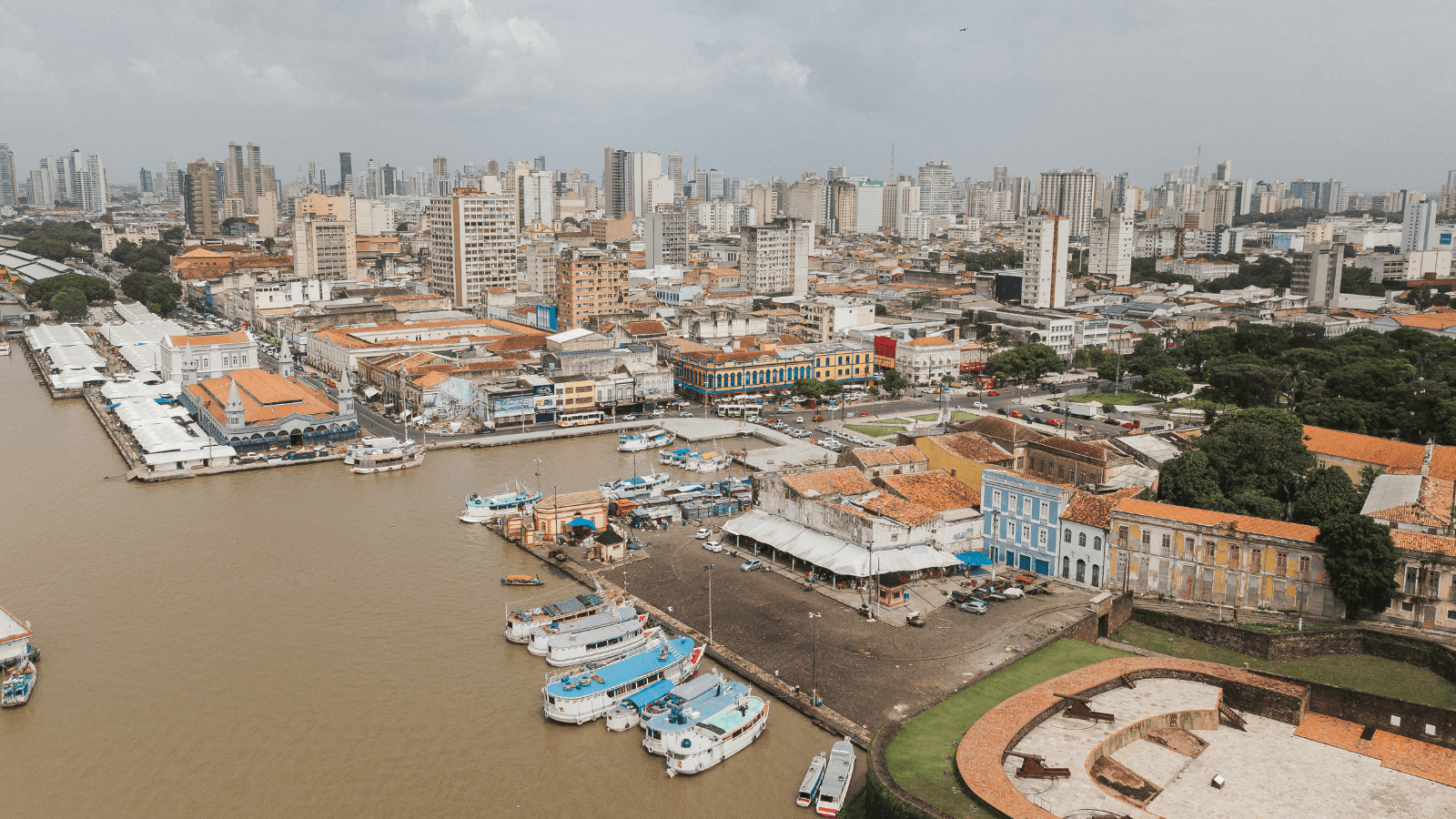
Last month, I had the opportunity to travel to Belém, Brazil, a city located at the edge of the Amazon Rainforest, for the UNFCCC’s COP30. I attended as a member of the Christian Climate Observer's Program.
Being an observer at COP30 and a member of the CCOP 2025 cohort felt like a microcosm experience—an intense, boiled down, metaphor for the entire sustained life of a climate activist. Even more, it felt like a small–albeit imperfect–taste of the kind of diversity, harmony, and interconnection often used to describe the coming kingdom of God.
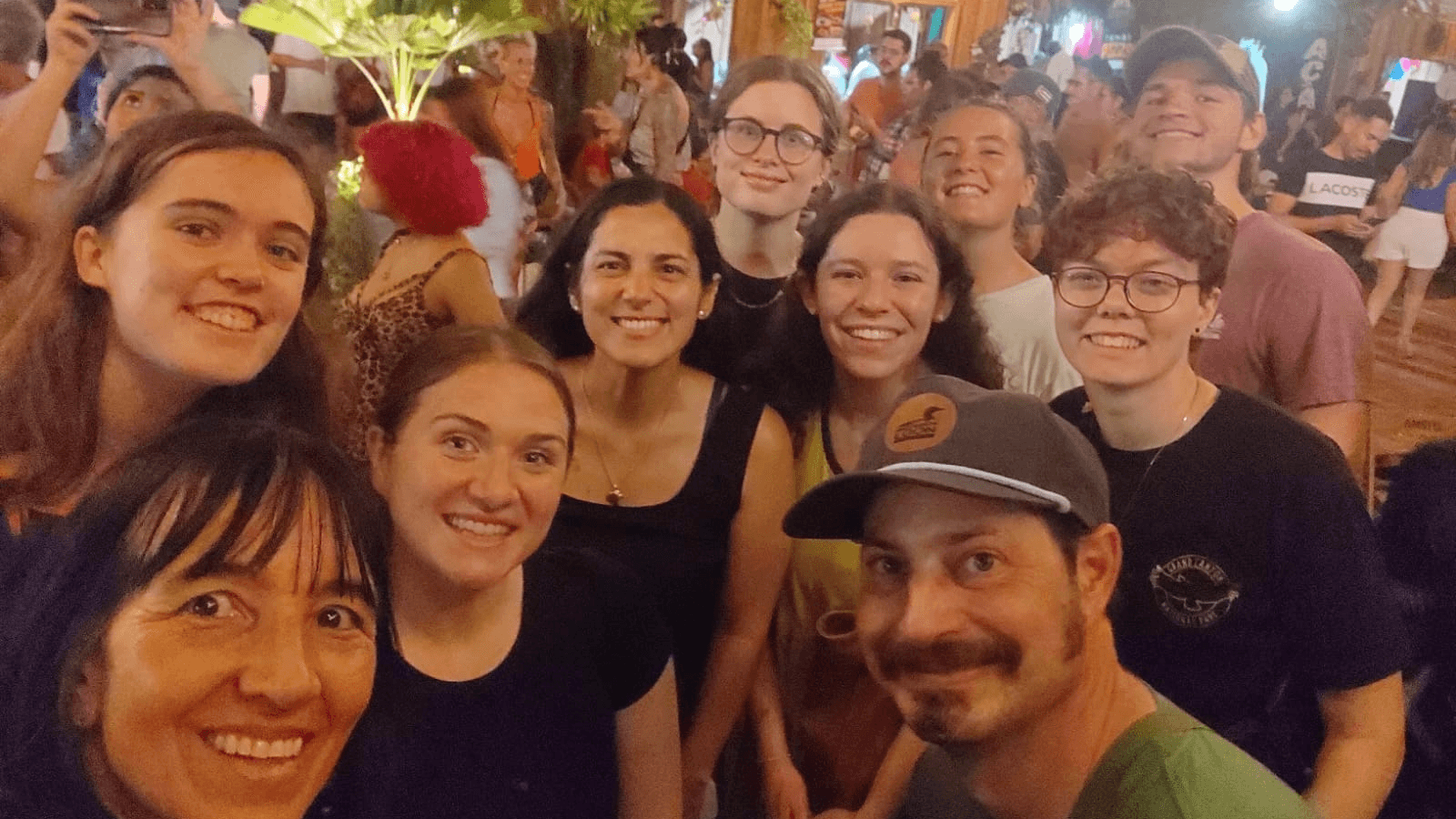
The CCOP group exploring the COP Cultural Zone in Belém
Just like the twenty-nine COP’s that preceded it, COP30 was anticipated by many with high hopes and exciting expectations. Yet, just like practically every COP before it, it ultimately fell short in its delivery. There’s a lot of grief to hold and lament to be shared about negotiating parties and corporations obstructing climate progress, about key voices and communities not getting the justice they are owed, about talk, and promises, and oh so many empty discussions unaccompanied by action and commitment.
I can’t tell you how many times in the weeks leading up to COP30, I heard the sentence “This is the implementation COP” or the “just transition COP”. As a first-time CCOPer and a full-time optimist, it was easy to feel reassured and invigorated by the words. My brain swirled with hope, this COP will be different from the others…..this is the COP where we’ll actually make big changes, as I learned all I could about the COP process and the Amazon Rainforest to prepare.
It wasn’t until arriving at the Blue Zone on that first day, that the full force of this absolutely massive and laughably ambitious goal hit me. I became immediately wrapped up in just how much there is to address, and discuss, and negotiate about. Not to mention how many groups, governments, and people must coordinate to make anything happen. It began to feel impossible to live up to such lofty goals in such a short amount of time. And in the aftermath of COP, it’s difficult to not let those early hints of hopelessness fully sink in.
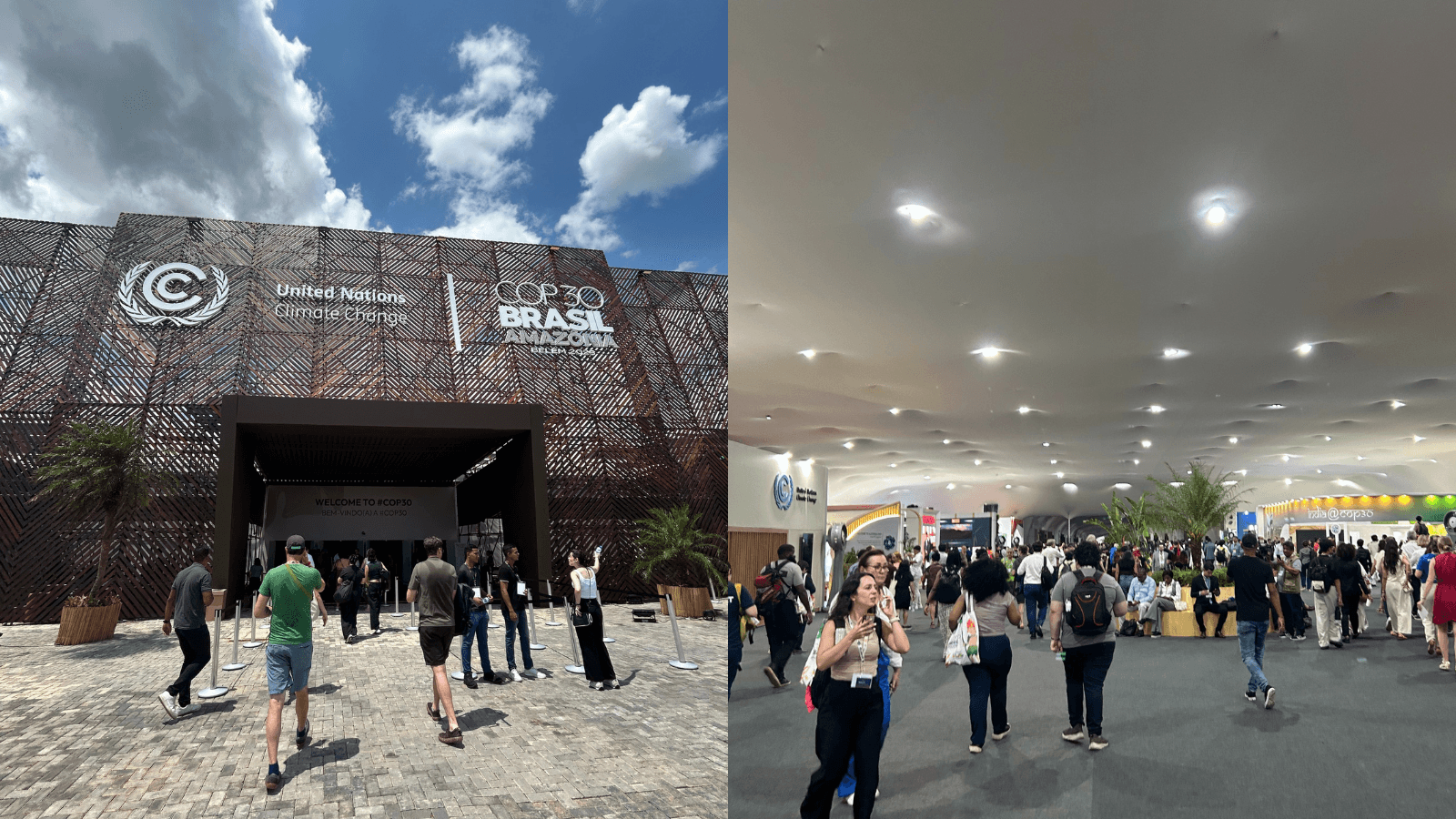
COP30 Blue Zone Entrance and Pavilions
However, if there’s one thing I’ve had to remember in this life and especially in my climate action, it’s that hopelessness is a privilege. If all I bring back from my COP30 experience is hopelessness, then I think I will have utterly failed in my duty as an observer in Brazil. A climate activist that can afford to give up in hopelessness, is one that does not fully grasp the realities of what’s at stake in this work for our world and our global neighbors.
So, what I’d rather bring back in my reflection of the CCOP experience are the incredible, positive moments that came out of COP30. These are things that are worth celebrating and that are valuable in providing hope to the broader climate movement. Furthermore, as a young Christian seeking to actively live out the Bible’s creation care mandate in my daily life, I found a lot of lessons to take away from the whirlwind chaos of the CCOP program and the COP itself.
COP30 marked the return of civil society with the People’s Summit taking place throughout the city. Our CCOP group was lucky enough to participate in the opening Boat Parade Ceremony, sailing the Guama River with thousands of other boats to draw attention to the cause of protecting the Amazon Rainforest and prioritizing the needs of the Indigenous Amazonian communities. The boat parade was a tradition that we learned is a common form of protest and advocacy in Belém.
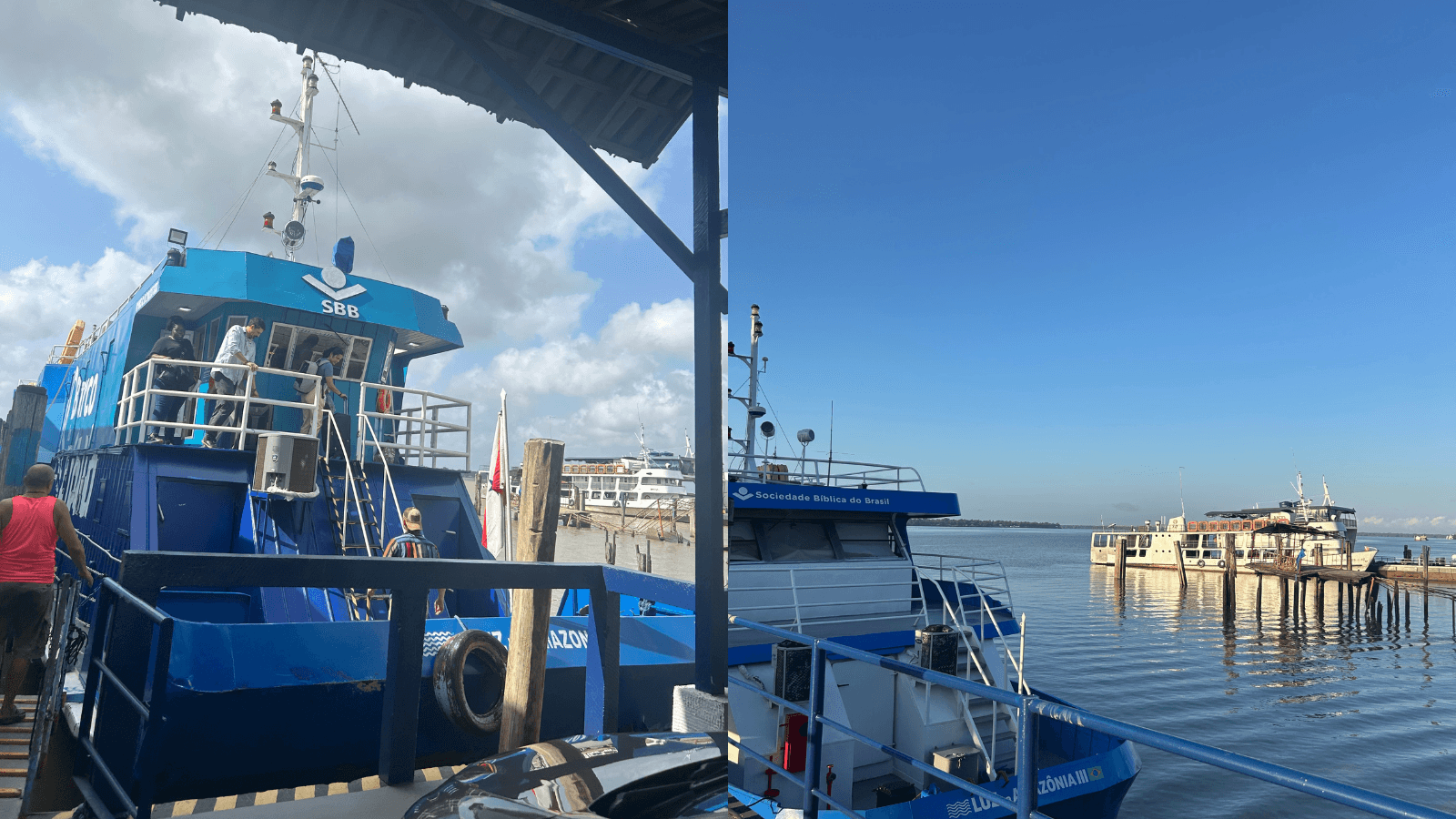
Bible Society of Brazil Boat aka our home and "Base Camp" for the week
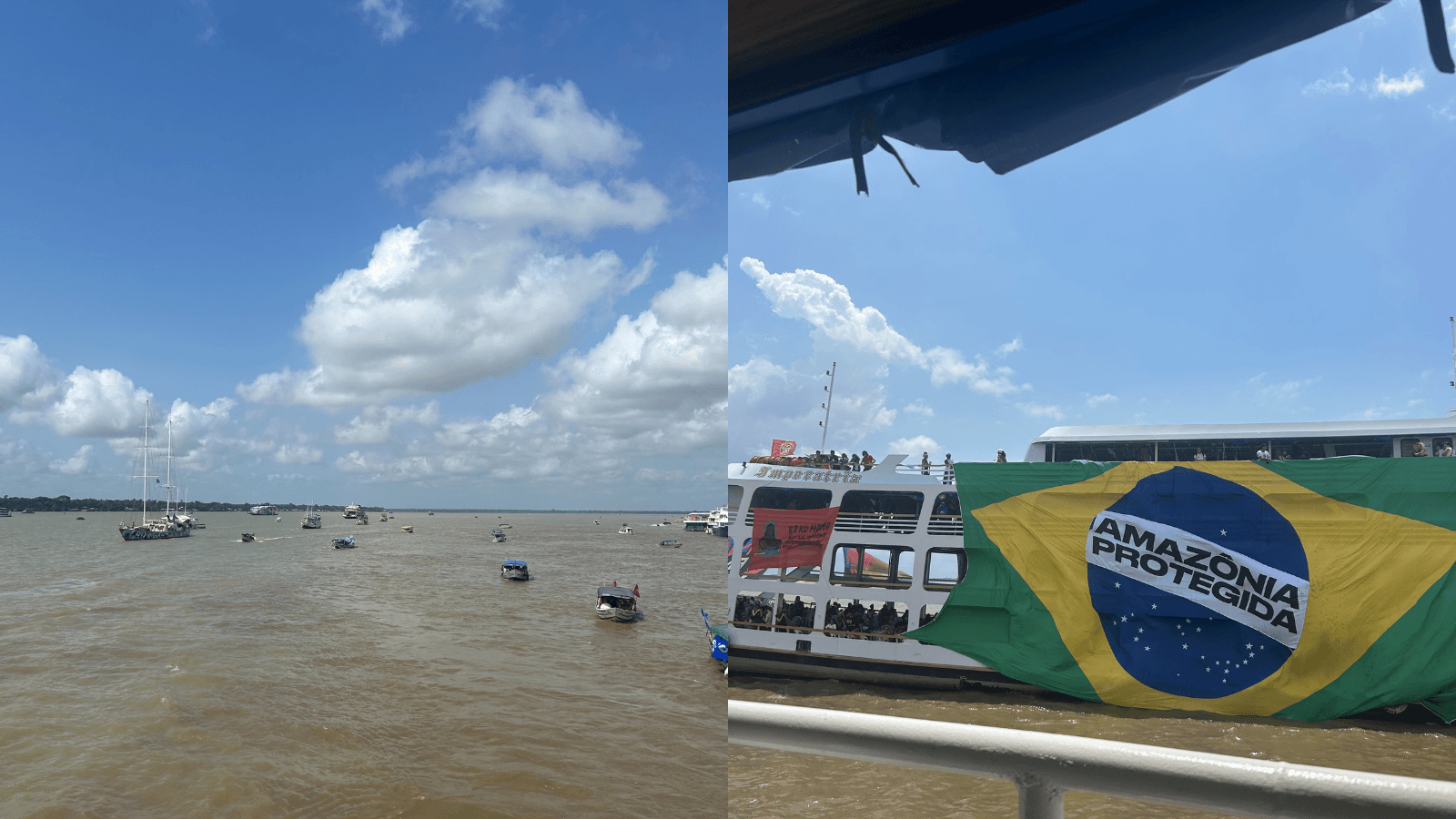
Scenes from the Boat Parade
A few days later, CCOPers marched alongside almost 70,000 others in the Global Climate March through the streets of Belém. It was incredibly meaningful to be both a participant and an observer during the march, as we represented our own community of Evangelicals while listening to local Brazilians and Indigenous peoples of the Amazon chant in Portuguese and Spanish. It was a special privilege to be purposefully on the sidelines of those whose home we were visiting, of those who were the real stars and leaders of the People’s Summit.
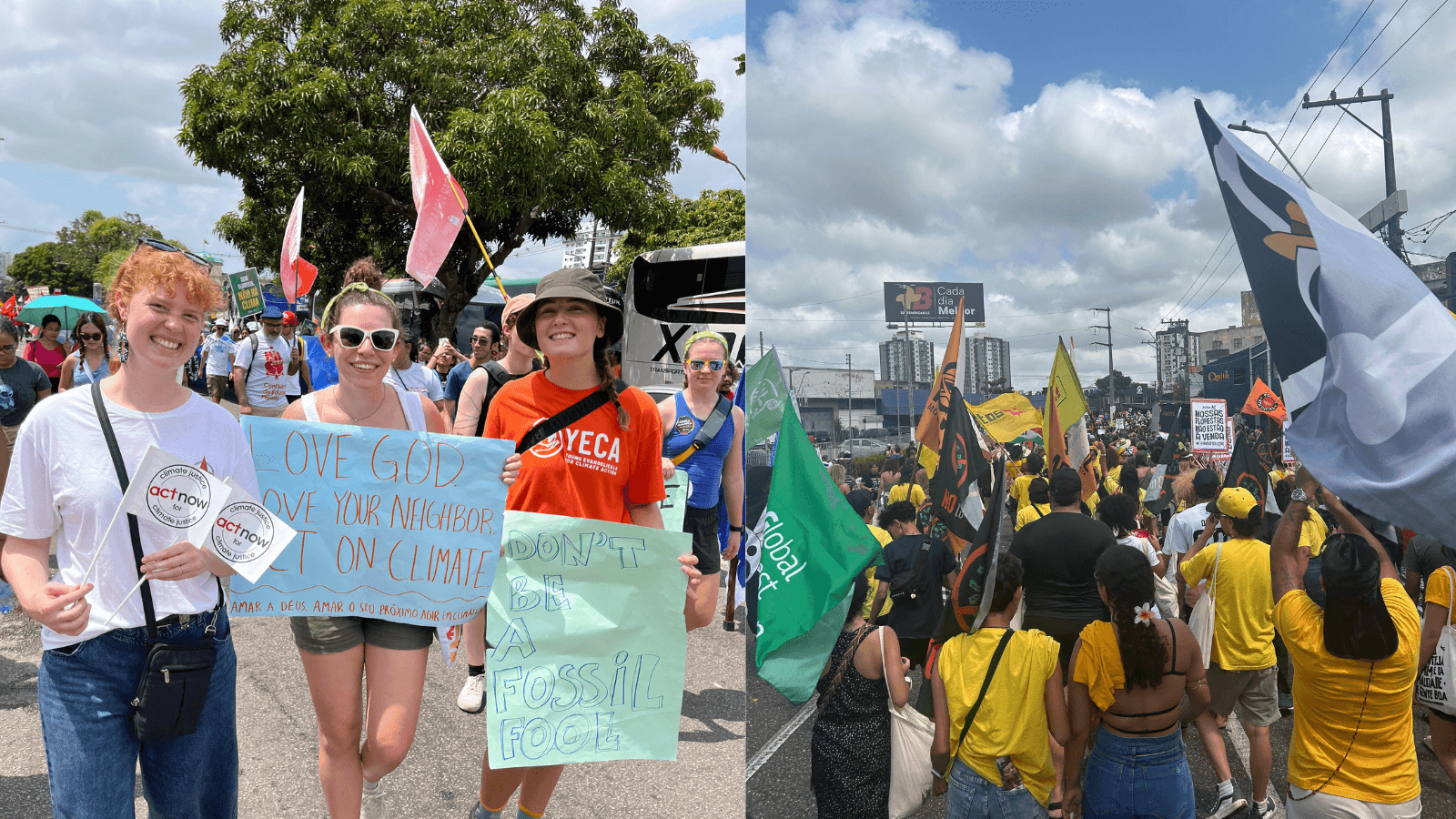
Scenes from the People's Climate March
To me, it was at the events of the People’s Summit–when people from all walks of life and corners of the world were brought together under a common cause–where I most clearly felt the Holy Spirit stirring and saw the Kingdom of God moving. We worship a God who loves culture, diversity, language, and connection across boundaries and barriers. I feel blessed to have experienced so many moments in Belém, both big and small, where the beauty of cultural exchange and appreciation shone through.
As I write this to our audience of primarily young Americans, I’m starkly aware of the disappointment we're probably all feeling by the fact that this year the U.S. did not send an official delegation to participate in the conference. I’ll admit, it was discouraging and embarrassing to bear witness to the pavilions and side events of so many other nations–all of them showing up to work towards progress, knowing that our country was absent.
Yet, let me assure my fellow young Americans that the U.S. may not have had its own pavilion, but young people certainly did! I was pleasantly surprised to see the sheer amount of youth centered events, youth led panels, and young people present as observers or negotiators on the ground. We made our voices heard, we collaborated with youth from all over the world, and we solidified ourselves as trailblazers in the fight for a safe and just climate future.
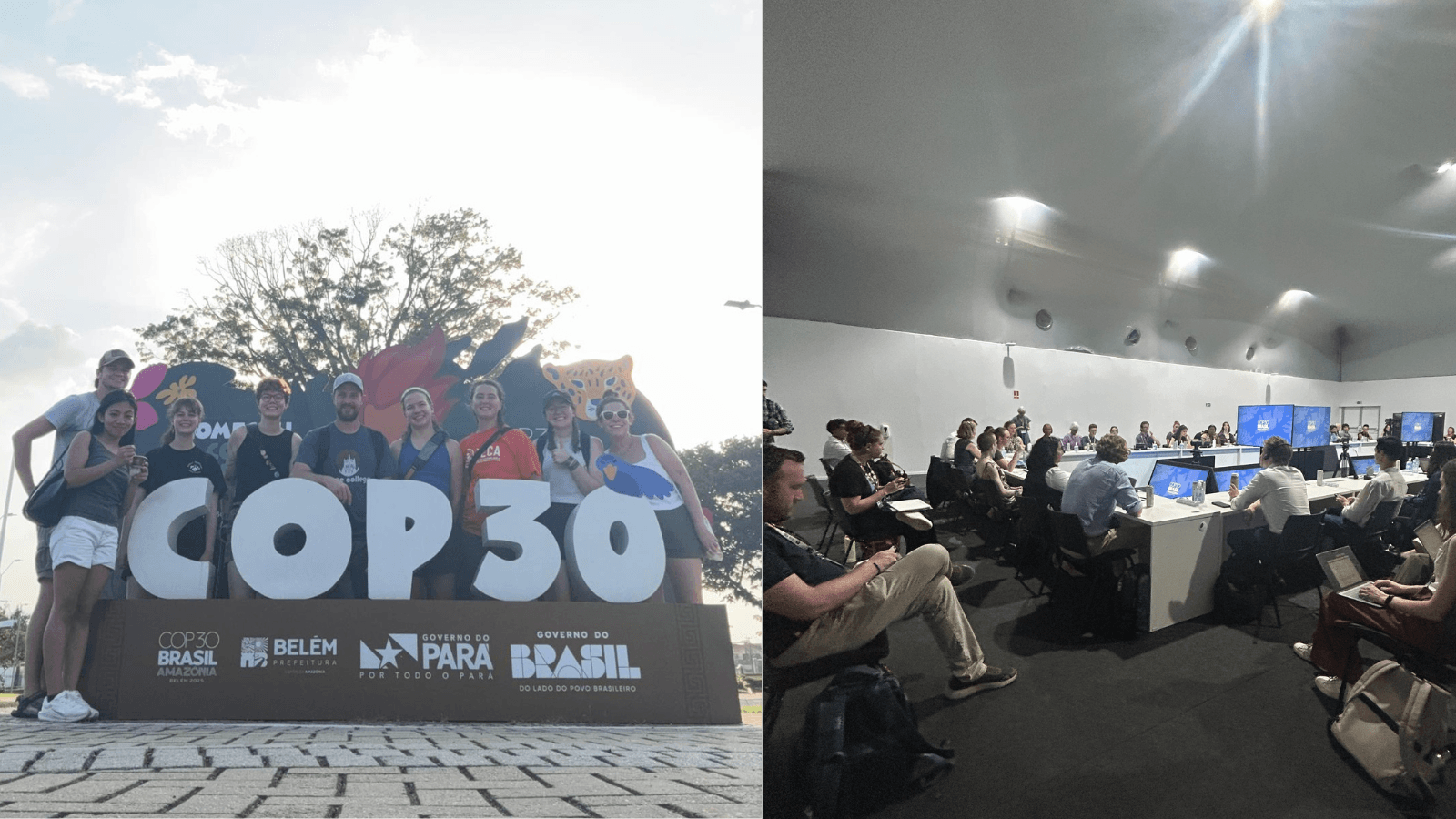
Exploring Belém and attending a Q&A session for young people
The popular narrative I heard from veteran CCOPers before arriving in Belém was, “You’ll want to do so much, but you won’t have time to do it all”. Turns out, they were right! This is a humbling lesson for someone like me who has massive FOMO, but I think it can also be valuable to us climate activists who often fall into the trap of thinking we need to do it all, show up for everyone, address every problem, and become an expert on every issue.
With only one week to experience all that COP had to offer, those first few days I found myself frantically racing from press room to meeting room, in between pavilions, zones, and side events. I was arriving late and leaving early to every session, and walking what felt like endless miles, all within the main conference grounds. Unsurprisingly, it was not only exhausting but unsustainable. Furthermore, I realized I was only half-present at every session I attended–never getting the full context, nor hearing the full stories being shared, and never fully processing each moment. It was no good way to be a COP observer and similarly, that mindset is no good way to be a climate activist.
While I don’t think I was able to totally figure out the perfect rhythm during my week at COP (I’m sure that’s something that even veteran COP observers are still working on), I do think I adapted to a better balance of soaking in all that COP and CCOP had to offer. Eventually, I was able to let go a bit of my frantic desire to be everywhere at once.
I learned that being an observer at COP meant realizing that there’s time for work and then time for rest. Yes, being a CCOPer meant showing up, engaging, learning, networking, and discussing, but it also meant pausing, getting outside, appreciating the beauty of the creation around us, enjoying our host city of Belém, sharing a meal together, or chatting with fellow CCOPers over a cup of tea in our cramped, floating base camp at the end of each night.
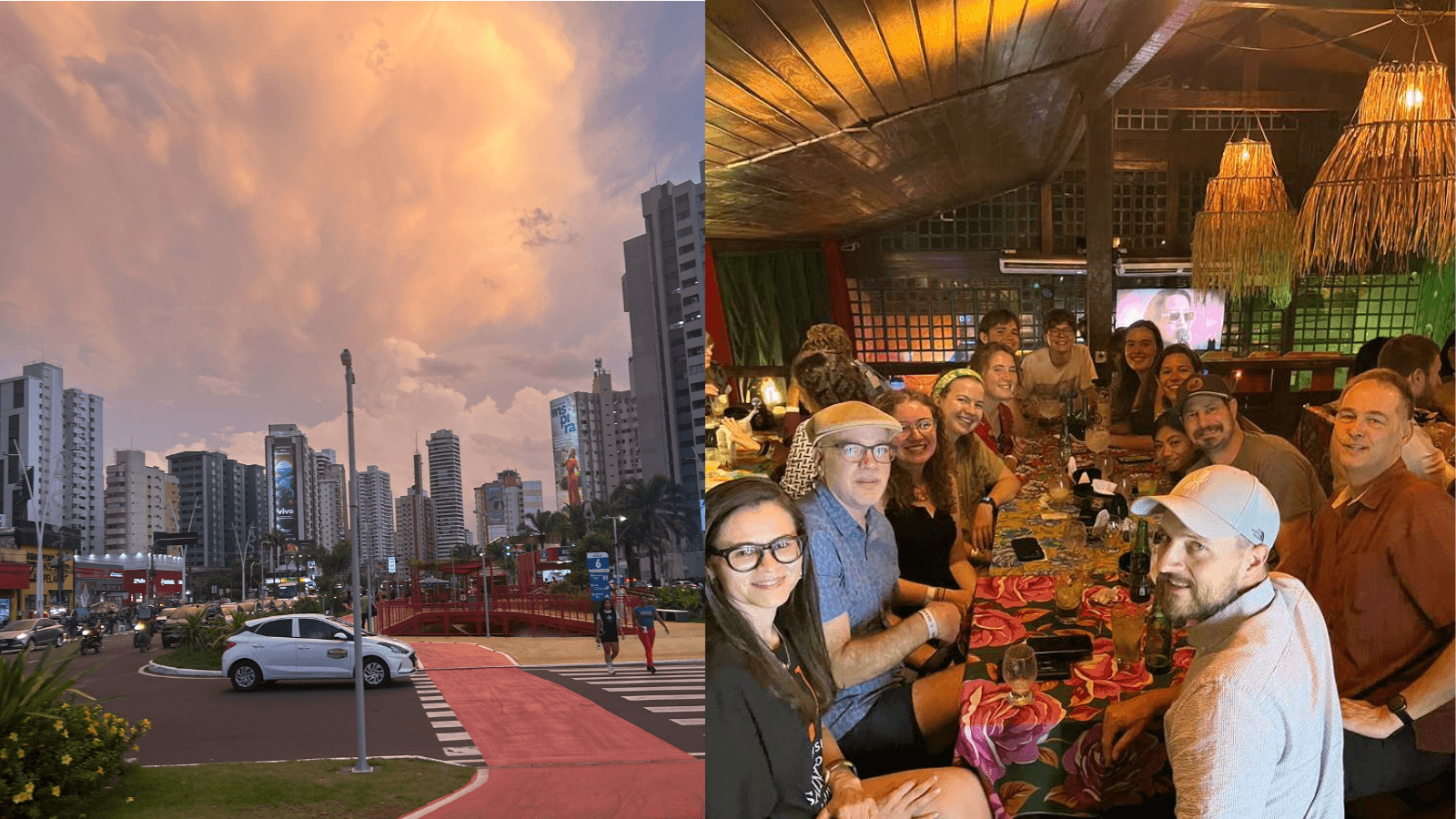
Downtown Belém and CCOP team dinner
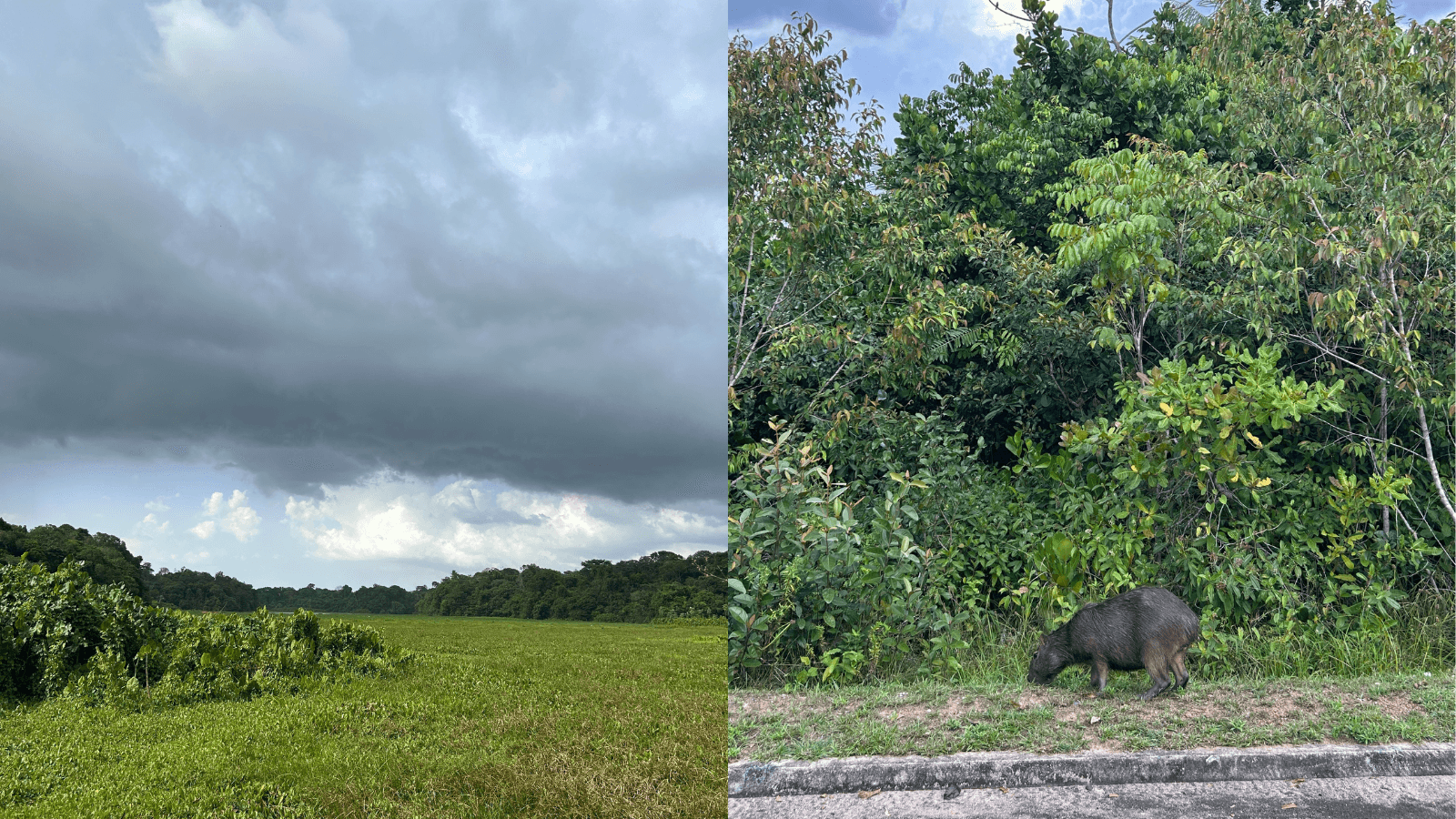
Spent time at a local state park and saw so much wildlife. The capybara was a highlight!
To be clear, this isn’t an invitation to sit out when things get difficult, to fully disengage, or retreat back into our comfortable bubbles, where perhaps we’re fortunate enough to not face the most pressing impacts of climate change. But rather, it’s an encouragement to pause and check in with yourself. This may look like spending time in prayer realigning your heart with God’s will, checking your pride and just listening to those around you, slowing down to preserve your own longevity in this work, feeding your passion for this topic, or rekindling your joy, reminding yourself why you’re doing this, and who you’re doing it for.
I’m confident that I learned more and was a better observer when from an outside perspective I was “doing less”. I was able to be fully present in important spaces, equipped with tangible stories, and relevant updates to bring back to my work. I had meaningful conversations with my fellow CCOPers and our wonderful CCOP leaders and mentors—who were all so wise, and insightful, and working in such incredible climate fields around the world.
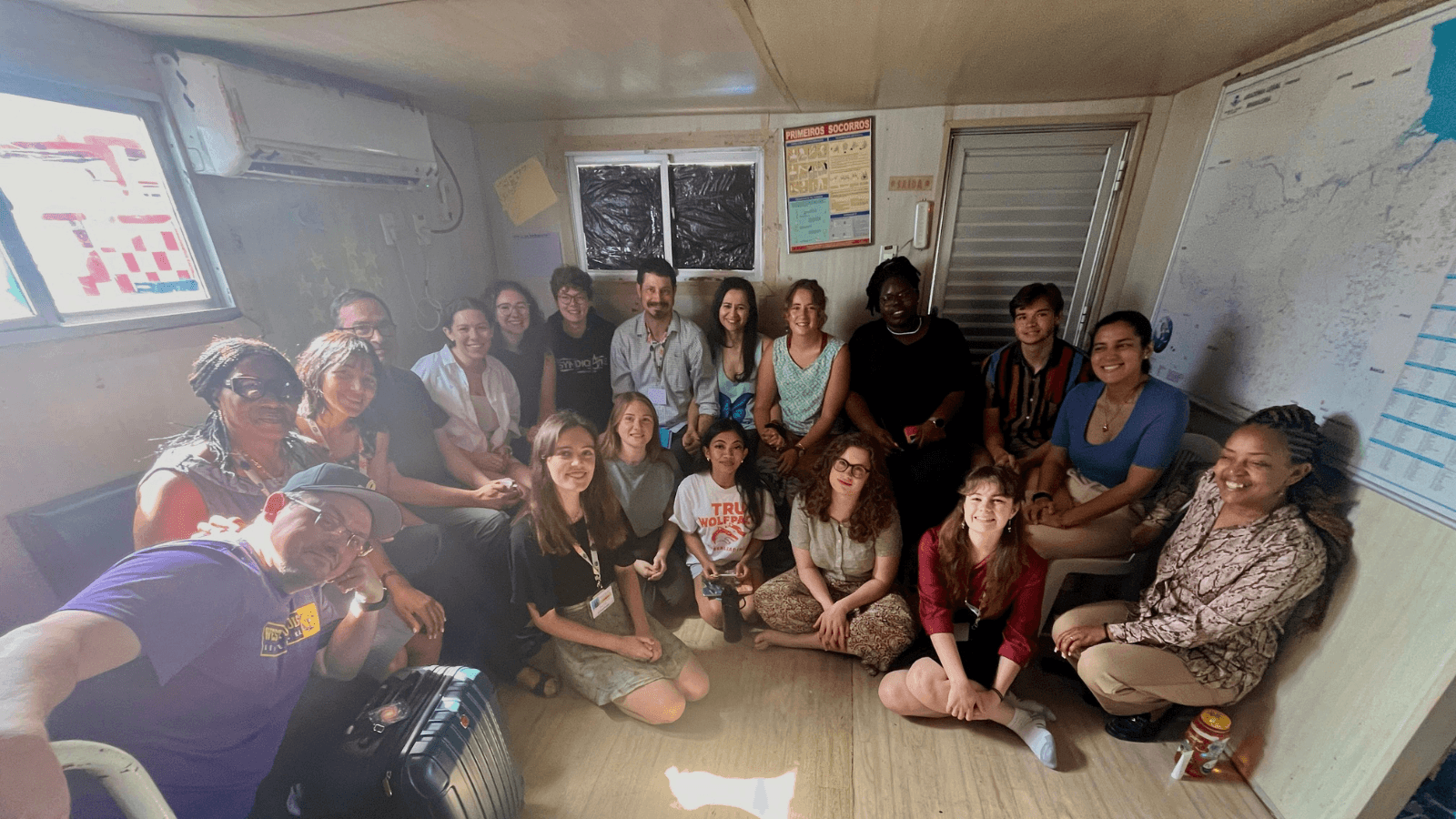
The CCOP team in our homey little common space on the bible boat!
This has been a necessary lesson for me to take back to my daily life and climate work. It’s also provided a refreshing reminder that sometimes the most progress, hope, and growth for both ourselves and for the environment can come from small, humble spaces, actions, and conversations.
Thinking back to when I was just flying out to Brazil for COP, this distinction couldn’t have been more clear. The same weekend I began my travels, my YECA colleague Lauren headed to Michigan to attend and present at a student-led creation care conference, focused on sustainability education and development for college students and campuses. I was holding both the excitement and rush of attending a major international conference, with the grounded reassurance and pride that YECA was simultaneously connecting with young leaders, collaborating on climate solutions in their local contexts.
As we leave behind the media buzz, prestigious leaders, and shiny badges of the COP, don’t forget that advancing this work year round, in both grandiose and subtle ways, is essential for keeping hope alive and ensuring that the needle keeps moving in our fight for a just and equitable climate future.
