
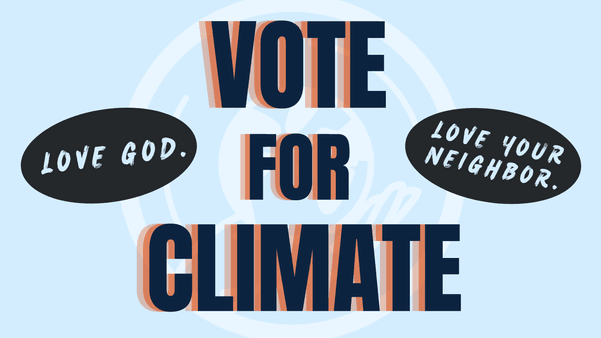
Climate change can feel daunting because it is a large and complex issue. It’s easy to wonder how much our individual actions chip away at an issue of this scale. Maybe you tell yourself “my actions don’t matter and can’t influence the climate”. While one person's action may feel small, individual responsibility can help create collective (and effective) climate action! Voting is one way to declare the future we want and to publicly voice the priorities of our generation. At Young Evangelicals for Climate Action (YECA), civic engagement is such an important pillar because we believe young Christians should have a say in who gets to make the decisions on climate policies!
At the Local Level
Sometimes, midterm elections can be overlooked because it’s not as publicized as presidential elections. Yet these races choose members of Congress, mayors, county officials, and other local leaders who authorize decisions that directly affect our communities. It’s local decisions that do the heavy lifting on how to respond to a changing climate by making the calls on: housing, land use, energy, water, and emergency preparedness.
Depending on where you live, your ballot might include local measures or candidates whose decisions will affect your neighborhood park or other local issues. Participating in these elections can have a visible impact on your very own family, friends, and neighbors,
At the State and Federal Level
Voting in midterm elections matters because elected officials in both Congress and State Legislatures also have the ability to shape climate policy at the federal and state levels. Legislators can introduce and pass climate minded bills and secure funding for major environmental projects. Climate friendly leaders can create programs that give young people opportunities to engage in environmental solutions. Elected officials also have a national platform to bring attention to local issues that might otherwise receive less public attention (you don’t have to be in Michigan to know about the Flint Water Crisis). At the same time, representatives can use their positions to place pressure about climate policies on other leaders. Voting helps platform the voices with climate priorities in mind to influence our government at large!
What Can We Learn From the History of the U.S. Policy?
Major environmental wins across the 20th century demonstrate that government policy can have a lasting effect. For example, the Clean Air Act (1990) showed the Bush administration taking climate seriously with support across party lines! Different Congresses have pursued different approaches to clean energy, emissions, public lands, environmental pollution, and climate investment. But these issues will continually be discussed regardless of who is in office. It’s up to us, as citizens, to put the people in office who understand the unique direction or priorities for your state or city. Understanding the ebbs and flows in history helps put today's climate movement in context and reminds us today’s policies are not new topics. Through voting, we can keep the ball rolling in a positive direction on climate!
Why is it Important to Vote With Climate in Mind?
An issue like climate change touches so many other aspects of our daily lives, including issues on many voters' minds going into this midterm election season. One large-scale example is the cost of living. But how can voting with climate in mind address a key voter issue like the cost of living?
The health impacts endured as a consequence of climate-warming pollution, cost us more than just our physical well-being. Poor air quality from pollution can result in an increase of insect-borne infectious diseases as well as harm to human respiratory and cardiovascular systems, including hypertension, coronary artery disease, heart attack, and stroke. In turn, we face the real economic burden of increased hospital admissions, emergency department visits, and premature deaths. As Christians, we’re called to care for those most at risk such as unborn children, the elderly, those with pre-existing health conditions, economically disadvantaged communities, and communities of color who have historically been unequitably exposed to the sources of this health-harming pollution (Matthew 25:44-45).
Climate change leads to more frequent and intense extreme weather events–a threat to public safety, and a threat to voters' budgets. Already in the first half of 2026, extreme weather events caused at least $31.9 billion in damages. This results in higher insurance premiums, infrastructure repair and recovery costs, and higher utility bills. The economic costs of climate change are unequal and unfair, with already under-resourced communities facing higher than average expenses. Climate-related expenses add at least $400 to $900 a year to the average household budget, and more than $1,300 in the most vulnerable communities. These extra costs often go unexplained or feel unpreventable, but the truth is they’re deeply interwoven into key issues that we as voters have the power to change.
How Can You Be Prepared for the Midterm Elections?
YECA is here to help you turn all of this information into action. We want to empower young Christians nationwide to get to the polls on November 3rd and make their voices heard on climate!
If you haven’t already, check out our free and easy to use Voter Tools to assist you in: registering to vote, requesting an absentee ballot, finding a polling place, and more! If you’d like to get involved with YECA’s mission to love God and our neighbors through climate action, consider signing up to be a Climate Advocate.
Lastly, two simple but powerful things you can do in your daily life are speak up and pray. Try initiating climate-centered conversations with your friends, family, peers, or coworkers. Bring up climate as an issue when midterm elections come up in conversations around you. We also want to encourage everyone to be consistent in prayer for our nation. Pray that God’s will would be done through our leaders, and that the hearts of voters would be open to voting with climate in mind as a way to love and serve their neighbors (Mark 12:30-31).
